What Is Generative AI Testing
Generative AI is reshaping the entire software industry, equipping applications of all sizes on the market with new capabilities to automatically generate text, write code, produce images, compile summaries, push recommended content, and a wide range of other diverse types of content. Now, more and more enterprises are integrating such AI-powered tools into their business processes to improve efficiency.
What Is Generative AI Testing
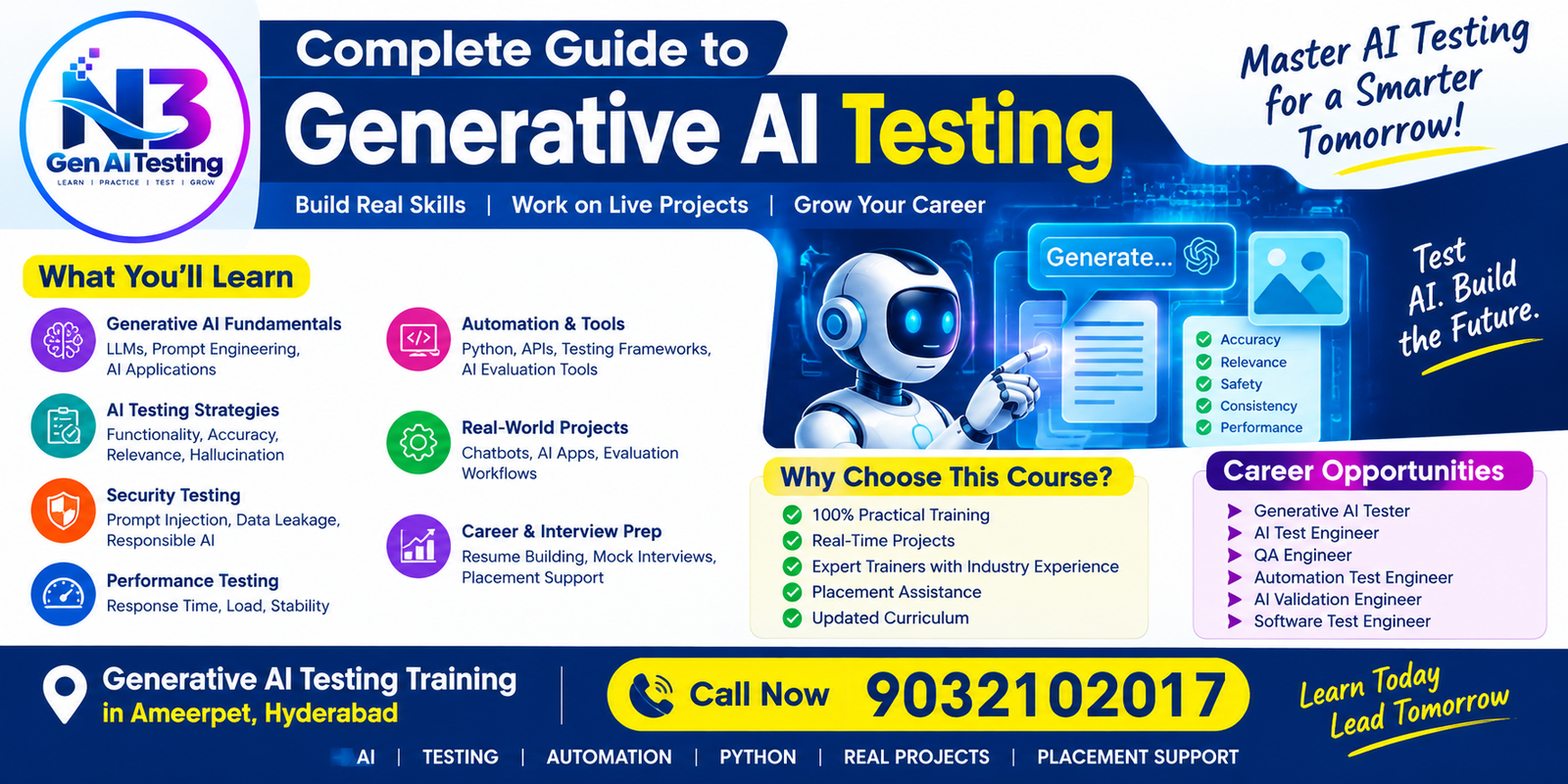
- Are the facts stated in this response accurate? Are there any errors?
- Does it directly respond to the question raised by the user, without answering an irrelevant question?
- Is the entire response always closely focused on the topic and aligned with the user’s real needs?
- Does the output contain any harmful or unsafe information?
- Does the AI model comply with all pre-defined system instructions?
- Are all sensitive user privacy or corporate confidential information properly protected and not leaked?
- Is the speed at which the system generates and outputs responses fast enough to not keep users waiting for too long?
These unique requirements combine to make Generative AI Testing a highly specialized and rapidly evolving niche in the software QA field, which not every traditional tester can master immediately after switching over.
Why Generative AI Testing Is Important
Now, enterprises in almost all industries are integrating Generative AI into their business processes, from customer service, healthcare, banking, education, e-commerce, software development, and marketing to countless other fields, all rushing to use this new technology to improve efficiency. This brings a series of new testing challenges that old quality assurance processes cannot handle at all, and old methods are completely unworkable.
- Quality of AI-generated responses
- Operational reliability of the entire application
- End-user experience
- Security of the application itself
- Privacy of user data
- Operational performance of the AI model
- Compliance with industry-specific regulatory requirements
- Operational stability of the entire application
As more and more enterprises integrate AI into their business, companies are in urgent need of professional testers—this group of people must understand the core principles of software testing, be familiar with the unique characteristics of AI behavior, and be able to meet these new testing challenges.
Core Directions of Generative AI Testing
A truly complete Generative AI Testing strategy must cover several interconnected core areas to produce reliable and credible test results, without missing any risk points.
Functional Testing
- Ability to process various user inputs
- Processes for responding to different user queries
- Logic for generating compliant responses
- Reliability of integration with various APIs
Bias Testing
Bias Testing repeatedly checks the AI’s output under a large number of different scenarios and user inputs, marking all problematic patterns.
- Gender
- Age
- Cultural background
- Geographic location
- Native language
- Other personal or scenario-related characteristics
The core goal of Bias Testing is to detect these harmful behaviors as early as possible, enabling enterprises to build more responsible and inclusive AI systems that do not trigger value-based risks.
Security Testing
Generative AI applications require specialized, AI-native Security Testing to address their unique security risks, which conventional security testing cannot cover.
The core focus areas of Security Testing mainly include:
- Prompt injection attacks
- Risk of data leakage
- Vulnerabilities of unauthorized access
- Unsecure third-party system integrations
- Malicious inputs from malicious users
- Risk of improper exposure of sensitive information
Security Testing must be embedded into every stage of the AI application’s entire lifecycle, from development to launch and iteration, and implemented throughout the process to effectively manage all risks without oversights.
Performance Testing
Testers continuously track these core performance indicators:
- Average and peak response times
- Throughput of the entire system
- Capacity to support concurrent users
- Reliability of API performance
- Consumption of computing and storage resources
- Stability of the entire system under high load
Generative AI Testing Lifecycle
A structured, step-by-step testing process can greatly improve the consistency and effectiveness of AI testing, without missing any content that needs to be tested.
Create Test Prompts
Testers must build a diverse library of prompts to evaluate the model’s responses under various conditions and understand all its performance.
Evaluate Responses
All responses generated by the AI must be evaluated against pre-set quality standards, which include accuracy, relevance, security, completeness, and consistency, and every item must be checked.
Automate Testing
Where conditions permit, repetitive, high-workload tests should be automated. The tools used include programming languages, various APIs, dedicated testing frameworks, and purpose-built AI evaluation tools, freeing manpower from repetitive labor.
Continuous Monitoring
AI systems will iterate over time, with underlying models, used prompts, training datasets, integrated APIs, and other application components constantly updated.
Tools Used in Generative AI Testing
Modern Generative AI Testing personnel use a combination of traditional testing tools and emerging AI-specific technologies to cover all evaluation needs without omission.
The main categories of commonly used tools in this work are as follows:
- API testing tools
- Python programming language
- Test automation frameworks
- Large language model APIs
- Prompt evaluation frameworks
- Dedicated AI evaluation platforms
- CI/CD pipeline tools
- Performance testing tools
- Security testing tools
- Test management platforms
Generative AI Testing vs. Traditional Testing
Traditional software testing almost entirely focuses on evaluating deterministic behavior: under the same conditions, inputting the same content will almost always produce predictable outputs, with no surprises.
| Traditional Testing | Generative AI Testing |
|---|---|
| Predictable output | Output may vary |
| Relies on fixed expected results | Evaluates performance based on flexible quality standards |
| Only focuses on functional correctness | Evaluates both quality and functional correctness |
| Uses rule-based verification methods | Assesses model behavior and response quality |
| Relies on conventional security testing | Addresses AI-specific security risks |
| Uses fixed, structured test cases | Builds flexible, prompt and scenario-based testing |
This core gap is why more and more enterprises are now looking for talents with professional AI testing knowledge to support their AI integration projects, as old testing talents cannot meet new demands.
Generative AI Testing in Hyderabad
Hyderabad has a very mature technology and software service ecosystem, making it an attractive core city for all practitioners who want to build a career in emerging technologies, and many people who want to enter the industry flock here. A truly reliable training program should ideally cover all core themes necessary for a successful entry into the industry, these themes include:
- Basics of Generative AI
- Architecture and functions of large language models
- Best practices for prompt engineering
- Testing methods for AI applications
- Relevant skills for API testing
- Python basics required for testers
- Various frameworks for automated testing
- Evaluation techniques for AI responses
- Complete process of Hallucination Testing
- Native AI security testing
- Performance testing methods for AI tools
- Hands-on real-time projects
- Comprehensive job interview preparation
Who Can Learn Generative AI Testing
Generative AI Testing is an easy-to-master skill with strong market demand, suitable for all types of practitioners to learn. These groups are all suitable:
- Manual testers
- Automation testers
- QA engineers
- Software developers
- Test engineers
- Recent graduates who want to enter the technology industry
- General IT practitioners
- Professionals who want to switch to AI-related tracks
Having a solid foundation in software testing is a very useful bonus, making learning easier.
Career Opportunities
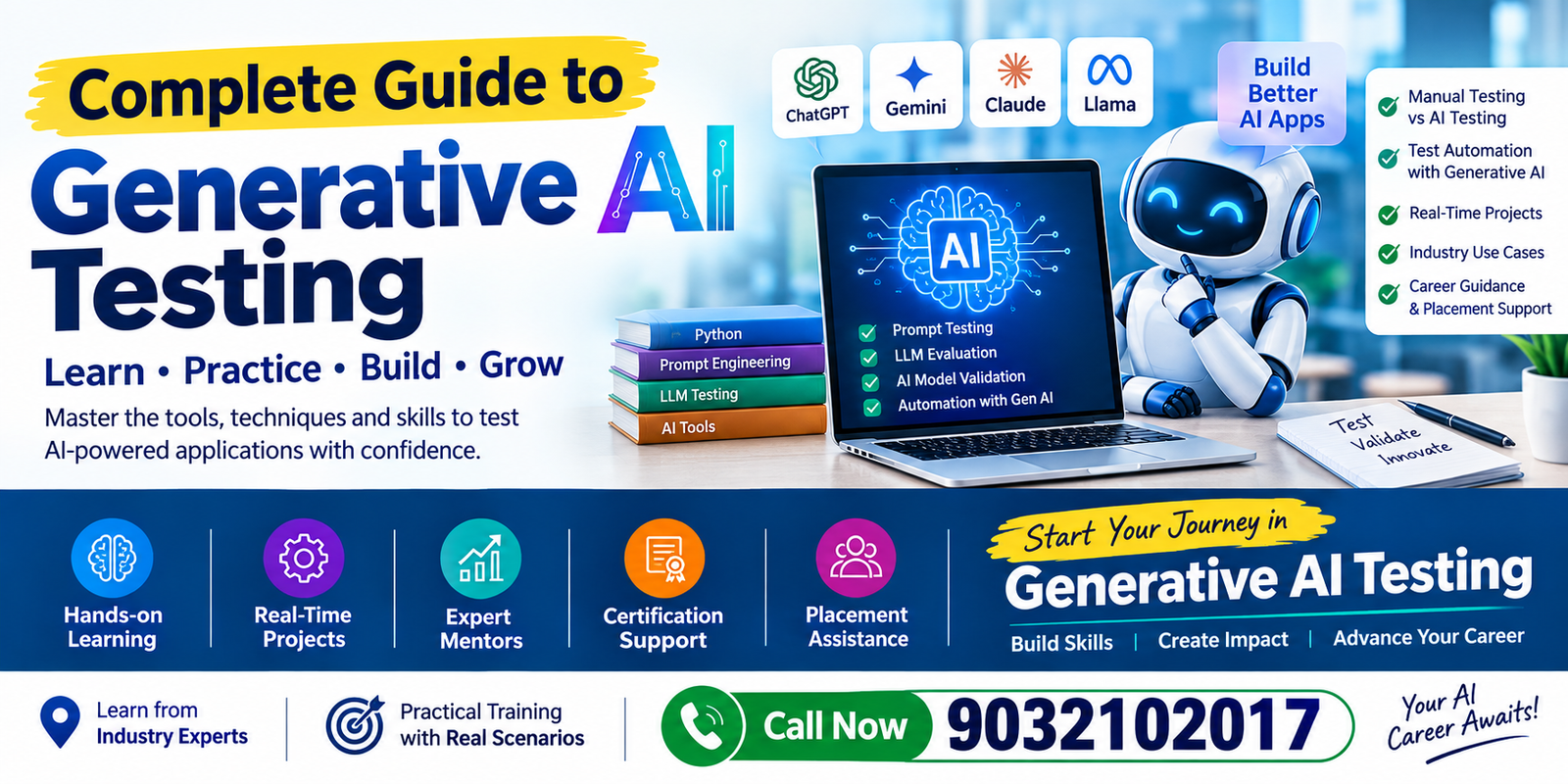
As more and more enterprises integrate AI into their products and internal processes, practitioners who master AI testing skills can apply for a large number of in-demand positions, with many options. These currently popular positions include:
- Generative AI Testing specialist
- AI Test Engineer
- QA Engineer
- AI Quality Analyst
- Automation Test Engineer
- AI Verification Engineer
- Software Test Engineer
- AI-focused QA Engineer
The available career opportunities and corresponding salaries will vary based on individual skill levels, work experience, location, employer size, and specific job requirements, and there is no fixed number.
Real-time projects
The ability to participate in hands-on real projects helps learners understand how AI Testing works in real workplace environments, aligning with the content in textbooks.
Interview preparation
ta-start=”20775″ data-end=”20939″>Providing mock interviews, resume guidance, and technical interview coaching is extremely valuable support for job seekers, helping you successfully receive offers.
Conclusion
Generative AI Testing in hyderabad has developed into one of the most core professional directions in modern software QA, and it is currently a hot track. To do a good job of Testing AI, it is necessary to master traditional QA knowledge, automation skills, core AI concepts, professional capabilities for prompt evaluation, security awareness, and a complete set of systematic methods to evaluate every response generated by the AI. For practitioners living in Hyderabad, enrolling in a hands-on Generative AI Testing Course in Hyderabad, or Generative AI Testing Training in Ameerpet, can help you build a systematic learning path, master all these market-demanded skills, and successfully enter the industry. The learners who perform the best and can develop long-term will focus on hands-on learning, keep experimenting continuously, build their automation skills, and deeply understand the behavior patterns of AI systems in real applications to lay a solid foundation.